
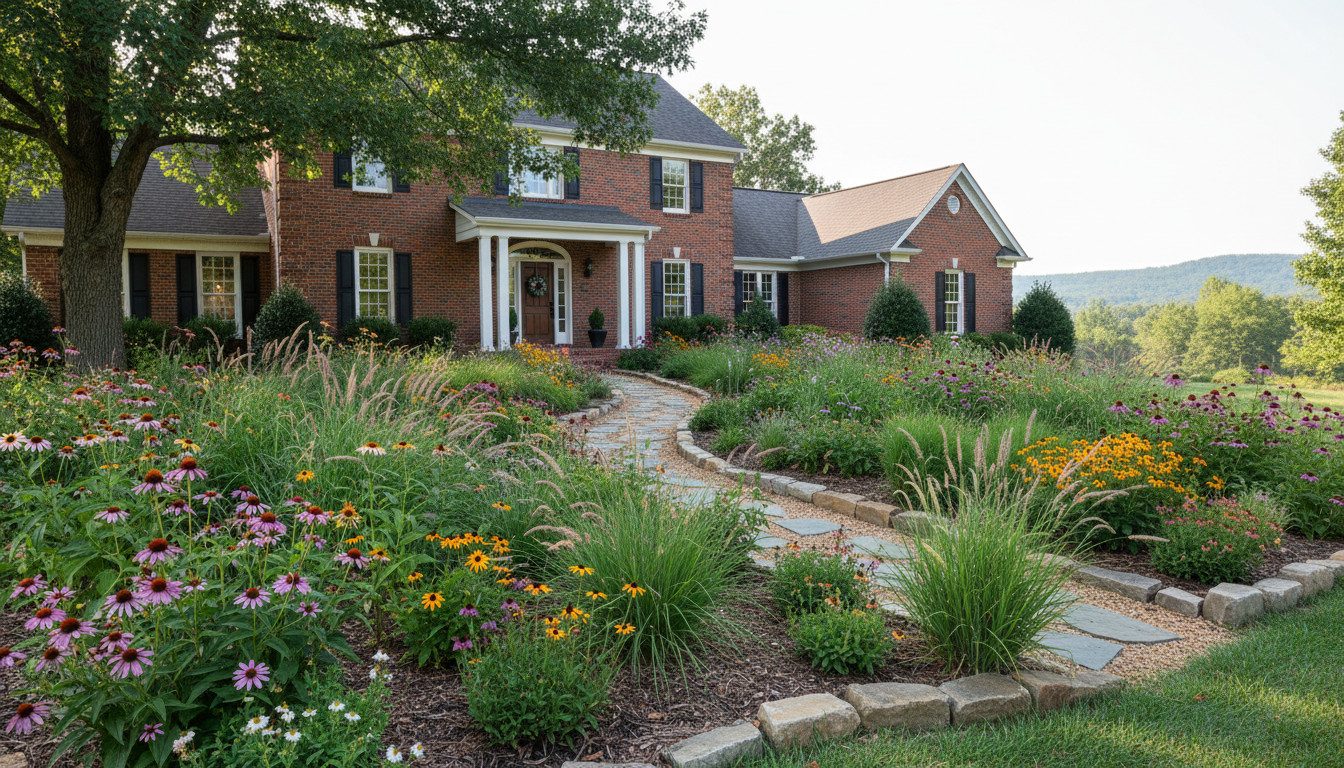
Staunton summers can be beautiful, but dry spells can turn a thirsty yard into a weekend chore. A drought-tolerant landscape helps reduce watering, protects curb appeal, and fits the rolling Shenandoah Valley setting without making the yard look bare or unfinished.
The goal is not to cover everything in gravel. Smart landscaping in Staunton, Virginia blends hardy plants, healthy soil, shade, mulch, and well-placed hardscape so the outdoor space works in both wet springs and dry summers.
Start with native and climate-adapted plants
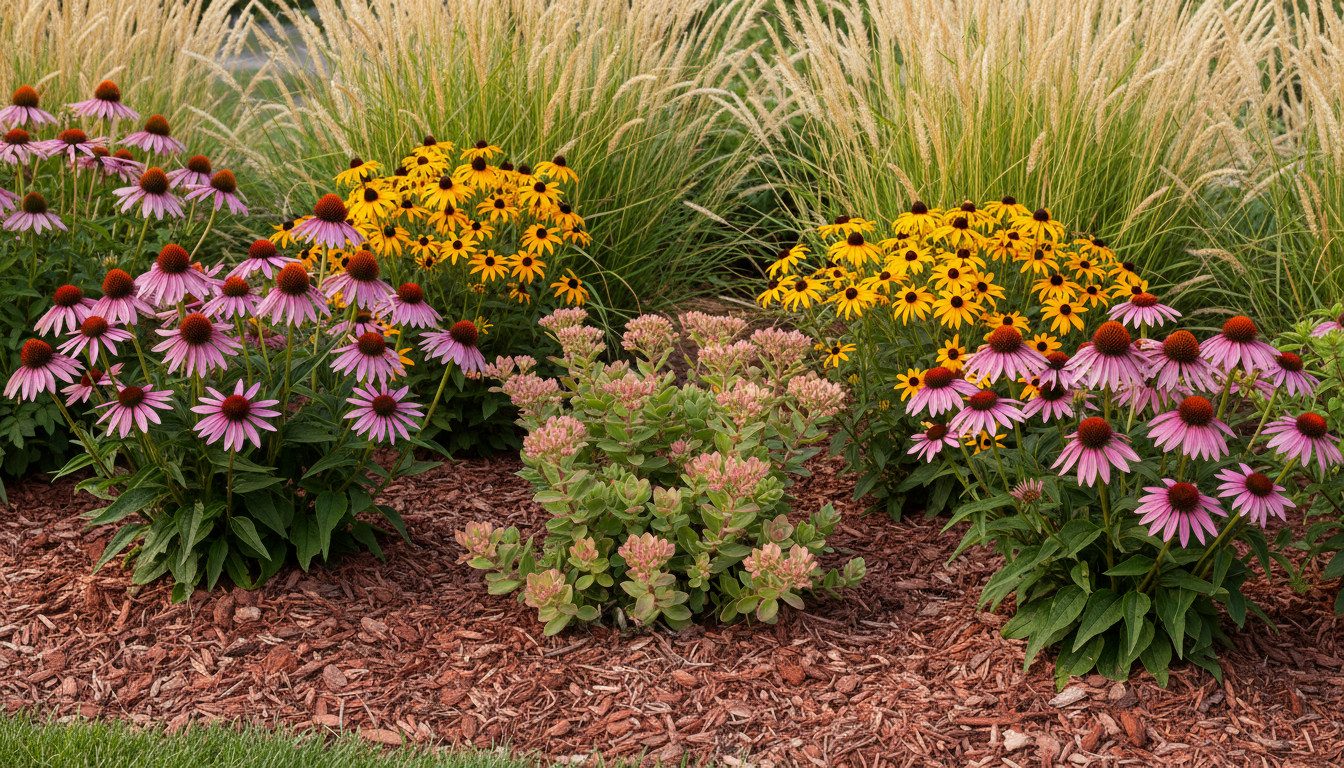
Plants that already handle Virginia’s changing seasons are a strong foundation. Native and climate-adapted plants usually need less water once established, and many support pollinators at the same time.
Good drought-tolerant choices for Staunton and Augusta County yards include:
Black-eyed Susan
Purple coneflower
Bee balm
Switchgrass
Little bluestem
Yarrow
Sedum
Coreopsis
For shrubs, look at options such as Virginia sweetspire, inkberry holly, ninebark, and certain viburnums. These can add structure around porches, walkways, and property lines without needing constant irrigation.
Group plants by water needs. Put thirstier plants in one zone near a hose or downspout. Use tougher plants in hot, exposed areas near sidewalks, driveways, and slopes. This simple landscaping design step prevents overwatering one area just to keep another alive.
For plant selection guidance by region, the Virginia Cooperative Extension is a useful resource for homeowners who want reliable, Virginia-specific information.
Improve soil before replacing plants
Many dry-looking yards are not just short on rain. They also have compacted soil. In Staunton neighborhoods with older homes, foot traffic, construction, and clay-heavy soil can make it harder for water to soak in.
Before adding new beds, loosen compacted areas and mix in compost. Better soil holds moisture longer and gives roots more room to grow. That means plants can survive longer between rainstorms.
A good drought-ready planting bed often includes:
Several inches of compost worked into the soil
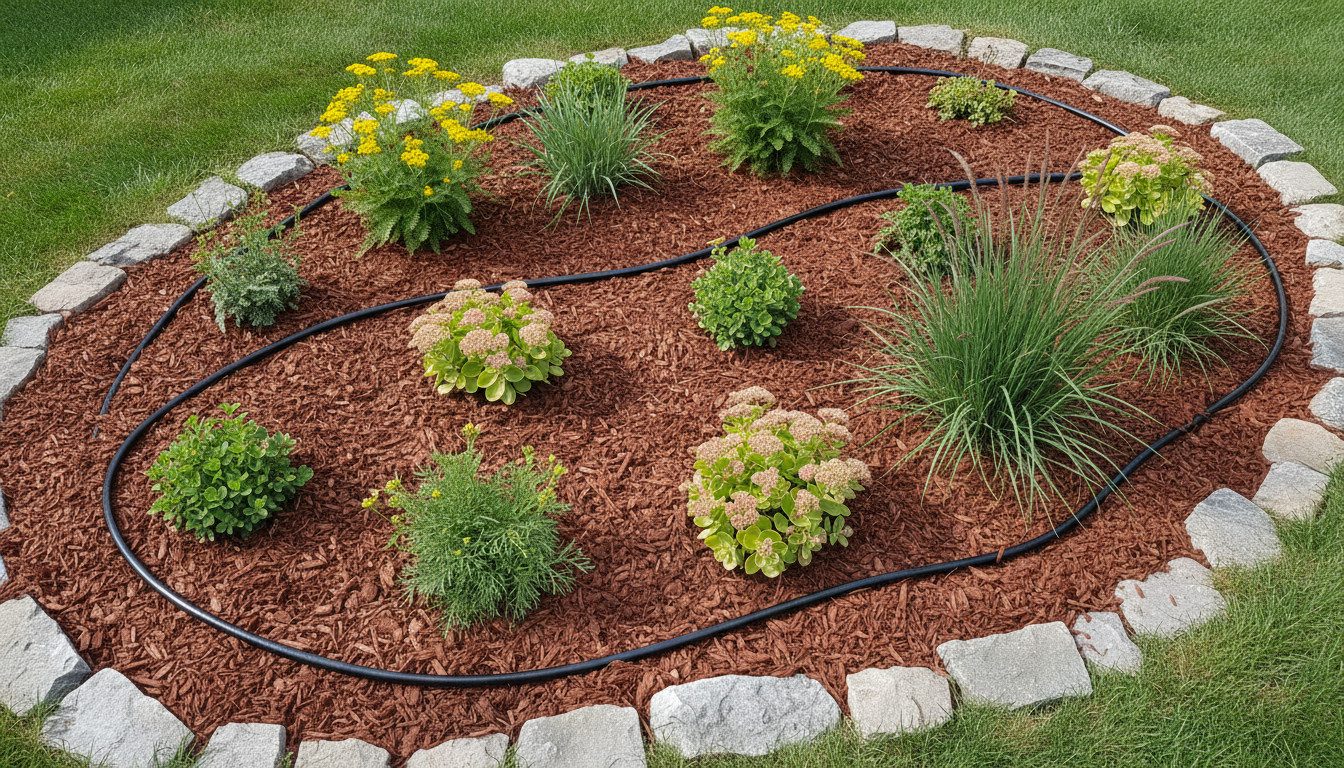
A 2 to 3 inch layer of mulch
Space between plants for airflow
A shallow edge to keep mulch in place
Downspout drainage directed away from foundations and toward planted areas when appropriate
Mulch matters more than many homeowners think. Shredded hardwood, pine bark, and leaf mulch all help shade the soil and slow evaporation. Keep mulch away from trunks and stems so plants stay healthy.
Use hardscaping to reduce high-maintenance lawn areas
A large lawn can look clean, but it often needs the most water, mowing, and care. Replacing part of a thirsty lawn with hardscaping can make the yard easier to maintain and more useful.
In Staunton, hardscape features work especially well when they match the home’s style and the slope of the property. A small patio, walkway, or seating area can control erosion and create a better place to enjoy the yard.
Popular drought-conscious upgrades include:
Patio pavers for outdoor dining or seating
Gravel paths with stone borders
Stepping-stone walkways through garden beds
Retaining walls for sloped yards
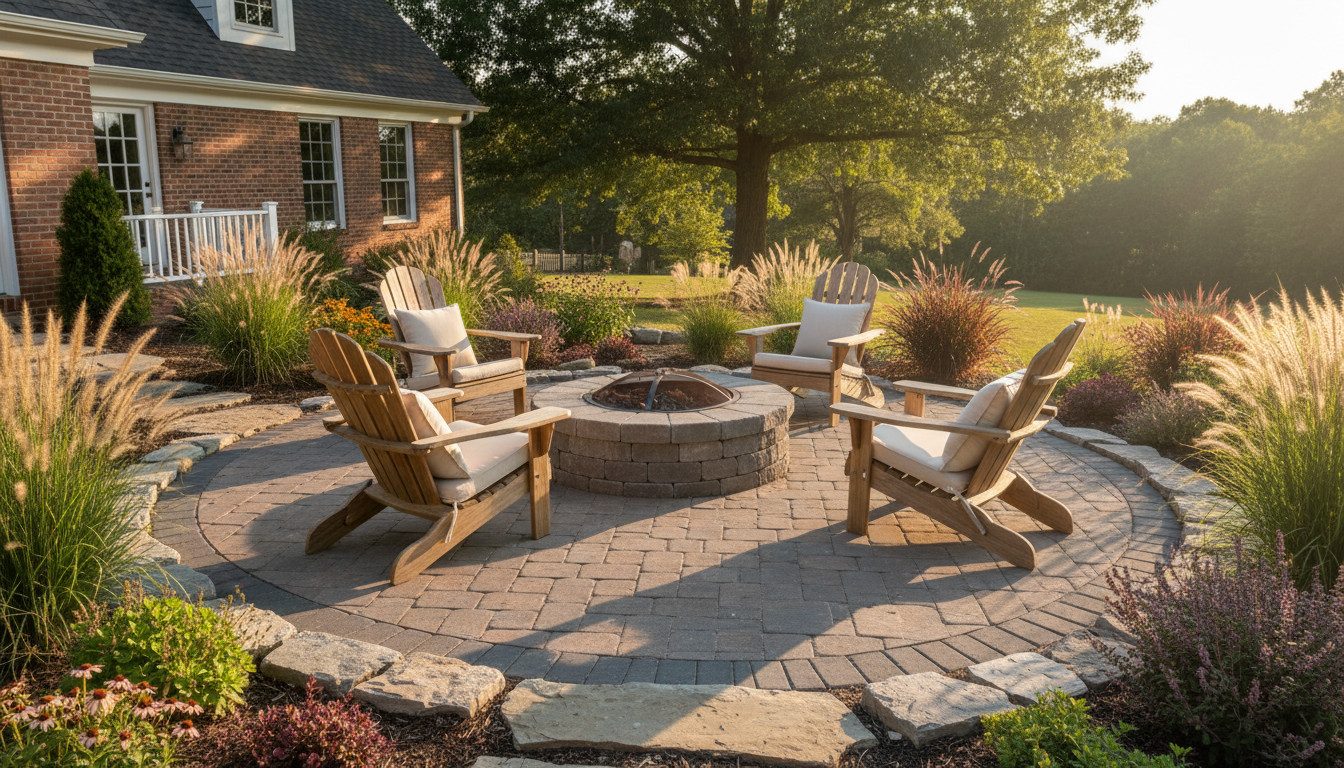
Fire pits with gravel or paver seating zones
A stamped concrete patio near the back door
Driveway pavers can also help define parking areas and reduce muddy patches. In some cases, permeable pavers allow water to move through the surface instead of running off the property.
Hardscaping should still feel connected to the garden. Soften stone and concrete with low-water plants around the edges. Creeping thyme, sedum, and ornamental grasses can make a patio feel settled into the yard rather than dropped on top of it.
Add shade and privacy wisely
Shade lowers soil temperature and reduces water loss. Mature trees already do this well, but they need care. A professional tree pruning service can remove weak branches, improve airflow, and help trees stay healthy through storms and dry periods.
For privacy, a fence can also protect planting areas from wind and sun exposure. A privacy fence or wood fencing along a hot property line may create a better microclimate for shrubs and perennials. Pair fencing with layered plants rather than one long row of the same shrub. Mixed plantings handle pests, drought, and seasonal changes better.
Shrub trimming also plays a role. Overgrown shrubs can compete for water and block air movement. Trim at the right time of year for each plant, and avoid heavy pruning during extreme heat.
Water less often but more deeply
Even drought-tolerant plants need water while they establish. The first growing season matters most. Deep watering encourages roots to grow down, where soil stays moist longer.
Try these water-smart habits:
Water early in the morning
Soak the root zone instead of spraying leaves
Use drip irrigation or soaker hoses where possible
Check soil moisture before watering again
Prioritize new trees, shrubs, and perennials during dry spells
Rain barrels can help capture roof runoff for garden use, where local rules allow it. Simple hose timers can also prevent accidental overwatering.
Build a yard that fits Staunton’s seasons
A drought-tolerant yard should still look alive in spring, summer, fall, and winter. Mix bloom times, leaf textures, seed heads, evergreens, and stone features so the space has interest even when rainfall is limited.
For many Staunton homeowners, the best plan is phased. Start with one sunny bed, one walkway, or one dry slope. Then expand as plants mature and the yard’s water patterns become easier to read.
If the project includes grading, hardscaping, fencing, or a full planting plan, working with a local landscaping company can help avoid costly guesswork. PQP Maintenance offers outdoor and landscaping services for homeowners who want practical upgrades that fit the property. Visit PQP Maintenance to explore help with landscaping, hardscaping, shrub trimming, fencing, and related outdoor projects.
A drought-tolerant landscape does not have to feel sparse. With the right plants, stronger soil, useful hardscape, and smarter watering, a Staunton yard can stay attractive through Virginia heat while needing less daily attention.
Targeted keywords: drought-tolerant landscaping Staunton VA, Staunton Virginia landscaping, landscaping, privacy fence, landscaping design, patio pavers, outdoor, fire pits, hardscaping, driveway pavers, stamped concrete patio, landscaping company, landscaping services, wood fencing, tree pruning service, shrub trimming, native plants Virginia, drought-resistant plants, Shenandoah Valley landscaping, Augusta County landscaping